Showing posts with label war. Show all posts

Sunday, May 29, 2011

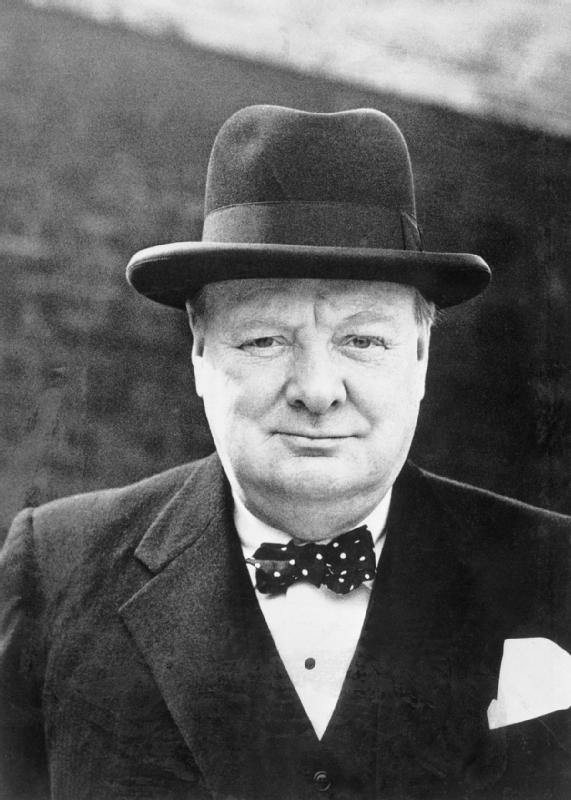
Alone, Grand Alliance, Triumph and Tragedy — Churchill on II World War

Some time ago I finished reading Churchill's multiple volume account on II World War. As I wrote before, Churchill narration is excellent and if you want to know the history of one of the most tragic periods of human history — his books are invaluable.

I do not support those who claim that Churchill was not „objective” in his relation of the war time. First, as we well know, there is no such thing as objectivity. History is played by people and is written by people. Their worldview and events they participated in always shape it. Second, I was amazed how honest Churchill was in his account. Of course, he toots his own horn, but he does not avoid writing about the sins and errors of his own nation and his own! It was the author himself, who wrote about his work: „This is not history, this is my case.” Well, I have many objections to the books, but I will write about them at the very end of this review.

In „Alone” (which, in the first edition, was called „Their Finest Hour”) Churchill writes about the Fall of France and about the two crucial battles of the II World War — the air battle of Britain and the sea battle of the Atlantic. Unfortunately for French people, his relation of French attitude to the war and to Hitler is shameful. He reveals the lack of any preparation to the war on French part, their lack of coordination and flat collaboration of many of French influential circles with Nazis. One of the most interesting parts of this volume
is about Dunkirk and the amazing evacuation of about 300 thousands soldiers (including about 120 thousands French) to Britain. Having in mind the power of  Hitler at that time of the war (May 1940) that was indeed a miracle. The narration about the Battle of Britain and RAF bravery is fantastic. It is here were we can read, firsthand, about emotions and gratitude that led Churchill to the famous saying:

„Never in the field of human conflict was so much owed by so many to so few”.

We then move to the North Africa and Middle East, just to discover how important the region was during the war, and how big was Britain effort not to allow Hitler to grow too much there. Here comes the part about Field Marshal Archibald Wavell, the great British soldier. This account is special — because Wavell was in fact dismissed by Churchill after unsuccessful operation „Battleaxe”. Churchill writes about Wavell in high esteem. The book ends with the vivid arration about the treacherous behaviour of Soviet Russia in the war — until the later time, when they were attacked by Hitler, what was called „The Soviet Nemesis”. Reading this part, I was amazed how shallow is human memory... Today, Russia's role is remembered as the part of the great alliance that conquered Hitler. And that is fine and true. However, we tend to forget (with great aid of
Soviet, and later and even today, Russian propaganda) that it was for Stalin’s policy that Hitler could gain so much in the beginning of the War. Were they not attacked, they would stay on Hitler's side... It is amazing that we don't see Russian's afterthoughts about that shameful part of their history ...

„Grand Alliance” is an epic tale about the turn in the fate of war and the formation of the alliance between Britain, United States, and now on the attacked side, Soviet Russia. It is extremely detailed and fine written part.  Sometimes I lost sense that it is historical account, because it reads like a novel.

„Triumph and Tragedy” describes the finale of the war and the German defeat. However, as the title goes, the joy of victory was spoiled by the tragedy of divided Europe, that was the result and, as Churchill suggests, the price of the war. As in many parts of the entire set, here we also get sincere admission to allies own blunders. Churchill seems to be an outspoken narrator of both the glory and the sin...

For example, when he writes about Poland and the tragic fate of Warsaw and the treacherous behaviour of Stalin and his puppet communist government (Lublin committee) it becomes clear that Allies simply indulged to Stalin’s whims and demands. BTW, I'm not entirely sure if Churchill did not try to exonerate himself from these sins in some way or another, but no one can deny he is honest in his narration...

However, there is deeply disturbing issue about the book, well, about all the books of the set. It is a complete silence about Holocaust... As we now know, Shoah, the mass murder of almost 6 million Jews during the war and about 5 to 11 million other ethnic or social groups was one of the major efforts of Germans, both logistically, politically and militarily. It is startling that Churchill does not write anything about it. I do not suspect him of anti-Semitism, though one of only two mentions about Jews in the entire set is a petty joke ..., but this ignorance is hard to understand.

There is no doubt that both Churchill and Roosevelt new about the systematic extermination well. Jan Karski, Polish underground fighter, informed western powers about that. There are evidences that both most important Polish Government in Exile figures, like Mr. Mikołajczyk had frequent talks with Anthony Eden, Churchill's right hand. So why such omission? Maybe it explains Churchill handling of the case of Jewish refugees coming to then being-born state of Israel?

I do not know, but this ignorance casts a deep shadow on Churchill's account, despite the paradoxical greatness of the books and the well deserved Nobel price in literature he won...

This review was written in Paris, between 25 and 29 of May, 2011 with lots of  thoughts about France, Europe and the bad past they came through ...

Sunday, April 03, 2011

Milestones of Disaster

A couple of weeks ago I finished reading the first volume of four of Winston Churchill „The Second World War. Milestones to Disaster”. First and foremost, I was greatly surprised what a good writer Churchill was !
I must say that he fully deserved the Nobel Prize for Literature, he got in 1953. Some may argue about it and probably did, denying  his literary merits. But I believe one can hold such views only until he or she discovers his narration. Was it not about the greatest tragedy of XX century, I would say it is really fantastic and captivating story.

The tome describes the years that led to the war and its beginning, sometimes called by the term that Churchill coined „Twilight War” (see Phoney War)

I'm not going to relate the content of the book in this review — but rather prefer to focus on the most important conclusion of the book: It is true that the Second World War broke due to the madness of Hitler and his willing German, Italian or Japaneese helpers, the German guilt for it and all its atrocities including Holocaust, is unquestionable.

But, as Churchill proves, it was possible also because of so many errors and forbearances and the fundamental moral weakness of the alies in the period after the end of the First World War...

The list of incredible and literaly stupid things the Allies committed is long. When Hitler started to grow into power, British entered into shameful Naval Agreement with Germany. Americans passed the infamous Neutrality Act. When Hitler defied both Versailles and Locarno treatises and entered with arms into RhineLand, both French and English have full legal justification for a prevention. Nothing happened, even to the amazement of Hitler himself...

Churchill writes about all these facts openly and frankly. There is no hidden agenda to show British as heroes. Oppositely, he plainly condemns these acts, and the overall tone of his narration is that of seeking the truth, not the good opinion about his own flock.

One of the most deplorable act committed by French and English just at the dawn of the tragedy, was the Munich Betrayal, where Chamberlain along with Daladier, essentially allowed Hitler to partition and annex Czechoslovakia.

The true value of the book lies in the fact that most of these facts are not well known or publicised. The media style of portaying the Allies as heroes has dominated and still dominates the collective memory of Europeans. Churchill debunks the cheap, pseudo heroism of his own nation. Of course, where and when the English and French  soldiers fought, they deserved the admiration, and Churchill does not avoid it.

His demeanour can be a paragon of how any responsible politician should behave: first find your own nations sins, errors and attrocities — and speak about them openly an frankly and repent. Without such attitude the world can not become a better place...

All in all - „Milestones to Disaster” is a must for all who are interested in XX History.

Written in Paris, April, 3rd, 2011.

While there I also finished reading  Eric's Metaxas „Bonhoeffer: Pastor, Martyr, Prophet, Spy (2010)” and I'm deeply shocked by its implications. A review to come soon...

Sunday, January 30, 2011

„Night” by Elie Wiesel

It is a book that, just after I started reading, made me quickly to relinquish it. And I had real difficulty to return ...

Written by famous Elie Wiesel, the Holocaust survivor and Nobel prize winner, „Night” is very realistic account on the tragic fate of Jews during Shoah. But the realism it is written with is almost unbearable.

Don't take me wrong, though. I do not mean I could not read it or that it is bad book. But to apply a typical slogan „Great Book” or „Nice reading” is in fact an act of betraying the author ...

In short, it describes the events since the beginning of the war that happened in Sighet, through the liquidation of Ghetto in that Romanian town. We are taken on a journey to Auschwitz, Buna (Monowice —Auschwitz III) and to Buchenwald. Despite the fact that the fate saved the narrator of the book, he lost his faith in G-d, in humanity and in himself. As more about the book can be found in the good Wikipedia article, I will not elaborate on it more...

In fact, when I finished it I was in a kind of trauma for several hours...

See the ending of it:

„At six a clock that afternoon the first American tank stood at the gate of Buchenwald. Our first act as free men was to through ourselves onto the provisions. That's all we thought about. No thought of revenge or parents, only of bread. And even we were no longer hungry, not one of us thought of revenge.
(...)
One day when I was able to get up I decided to look at myself in the mirror on the opposite wall. I had not seen myself since the Ghetto. From the depths of the mirror, a corpse was contemplating me. The look in his eyes as it gazed at me, has never left me...”

Paris, January 30, 2011

Thursday, December 17, 2009

The Next 100 Years: A forecast or geopolitical fantasy ?

As with many books I have very mixed feelings after reading George's Friedman "The Next 100 Years". When it comes to reading experience, the book is just excellent. It is a true page turner and gives to the reader the great satisfaction of reading.

In short: the book analyses the global geopolitical trends of XXI century and tries to predict the events of nascent centennial period of time. The analysis of the current situation is breathtaking - it is one of the first analysis that describes the real trends behind such events like Iraq war, seemingly stupid errors of American administration and explains how such acts work on a deeper strategic level. The basic conclusion of this part of the book is that the American global dominance is of unprecedented scale, not known in history of civilization. What is more, we are not in the period of a dusk of "American day" but - rather - at its dawn.

All the events , including those that seemingly put US into some inferiority, work in the opposite direction. For example, even though the American-Jihad war, started by the events of 9/11 does not look as successful, it has in fact caused the great disruption in Islamic countries, essentially blocking any major power to arise.

There are many such excellent conclusions and inferences ...

But, as you continue to read it, the book becomes more and more a sort of fantasy than a well grounded forecast. For example, the conclusion that by the mid of XXI century the most important powers of the world will be: US, Japan, Turkey and ... Poland - made my sides split with laughter. On the surface, I should be proud (and I truly am) of the author estimation of my own country great potential - but, I think he simply forgets or ignores the large geopolitical change that just started to shape the Euro-Asia - the dawn of European Union, in which Poland has already its place, and to which Turkey aspires. The author, with typical ignorance, thinks of EU as of failed project, and it fails because it does not follow American example.

This is, in my opinion, one of the great faults in George's reasoning. The truth is different, EU is a project that breaks the traditional nation-state paradigm, and, as such, escapes the classical geopolitical trends. Of course, EU may fail. It errs. It joins the new active generation, hard working young people in many countries with somehow decadent societies of "Old Europe".

But in this weakness lies also its power - and it is highly unlikely that we may see a "Polish block" rising in power and challenging Germany, France, UK - also in military sense.

Turkey maybe more problematic, as seen from 2009 perspective, but its efforts to join EU will finally make this country a powerful, yet, peaceful part of the region.

Whatever we say, the thinking in XXI century in terms of almost tribal, nation-state struggle, seems to be anachronic and quite strange...

Having this in mind, I found this part of "The Next 100 years" as highly unrealistic.

When the author finally comes to the mid-XXI century war, and describes it with details worth good sci-fi novel, I came to conclusion, that the real value of the author prophecies are of the same sort as of any, maybe good, science-fiction author....

I also think that the author expresses some other strange opinions worth to oppose. For example, when he describes role of the computer in modern civilization it does so with complete ignorance to the true meaning of digital technology, Internet and new media. The only two aspects he notices is the reductionism of the digital world (because it reduces everything to bits) and the emanation of American philosophical pragmatism...

He seems not to understand what software is all about and how computer and Internet enhanced the human communication, collaboration and hope for better future - on a global scale...

Finally and despite my criticism - I recommend to read this book. It is deeply moving and fascinating. But don't believe in its prophetic power :-)

Monday, November 16, 2009

Cat's cradle - Mega Mockery of our societies ...

Kurt's Vonnegut "Cat's Cradle" is one of the strangest books I've ever read.


The plot starts quite innocently with the narrator presenting himself as a writer planning to write a book about the American nuclear bomb inventor. This goal has perfect sense and is aimed at showing how "normal" was the life of those who, by their activity, created means to kill masses of people. In his pursuit, the narrator makes friends within the family and co-workers of the bomb inventor. They may hide the great secret of late father of the bomb - the mysterious Ice-9.
At this stage of the narration a fictional religion of Bokononism is introduced, with is fundamental concept of karass - the group of people, who are working together to fulfil God's will.

The plots goes crazy when the narrator arrives to a fictional island of San Lorenzo. Here, the events spiral quite fast. Shortly after arrival he is offered to become the president of the nation of the island - and he accepts that post, being in love with the women who was destined to be the wife of the president. Just at the moment of his inauguration as the president, the small plane crashed at the rock on which presidential palace stood and that crash ignited the sequence of events ending in the ultimate cataclysm with almost all the population of the island gone and with all water transformed at room temperature into hard ice after the spillage of Ice-9 in the accident.

Through this crazy plot, Vonnegut tells the most ironic refutation of our society, military pursuit, political system, "forbidden fruit" man-made religions and cults. The most important of those is the mockery of man-made religions. Bokononism, invented for the purpose of the novel, reveals so close resamblance to some cults and sectarian groups that we can only marvel about Vonnegut's wit and Machiavellian wisdom...


And I remembered _The Fourteenth Book of Bokonon_, which I had read in its entirety the night before. _The Fourteenth Book_ is entitled, "What Can a Thoughtful Man Hope for Mankind on Earth, Given the Experience of the Past Million Years?"
It doesn't take long to read _The Fourteenth Book_. It consists of one word and a period.

This is it:
"Nothing."


Sunday, October 25, 2009

So it goes....

Kurt Vonnegut's "Slaughterhouse Five" is probably the best anti-war novel I ever read. Paradoxically, it is not openly or verbally pacifistic. Rather, by showing the absurdity of human condition in the war time, it builds in readers the strongest aversion to the war and to the artificial and often pompous "war heroism" - we so frequently witness in books and in media.

"Slaughterhouse Five" is a surrealistic novel, sometimes skimming on the brink of science-fiction genre. The title refers to the real building of the Dresden Slaughterhouse where American's POWs were kept in the very end of the war when the famous Dresden bombing happened.

It's subtitle, "The Children's Crusade" refers to the scene in the beginning of the book, where former II WW soldiers were called babies by the wife of war hero. In some sense the purpose of the subtitle is to despise the typical, pompous, heroic stories of the wars...

The most of the narration is filled by the story of Billy Pilgrim, an American soldier, who is sent by Germans to Dresden, just before the bombing. Billy experiences a mental state called "unstickness of the time" - he visits his past, present and future out of sequence, sometimes in backward direction and often, repetitively. During his time travels, he claims to be kidnapped by aliens and kept as hostage and zoo exhibit on a planet called Tralfamadore. These parts of the plot seem to be quite strange, but when you immerse into the text deeply, they play some increadible role - far from typical sci-fi motives in other novels.
In fact they have some philosophical implications. The questions of free will and of time and its meaning - are central to them. I like the concept of time and past looming from them - the past exists, is unchangable and can be visited in a way similar to that of our visits of places.

The bombing of Dresden is described with scarce details. Aftermath of the bombing, with infamous "corpse mine", where one of characters dies from vomiting (caused by the stench), is probably the only more detailed part of the novel.

The book is deeply related to the other Kurt's novels, "Mother Night" - the main character of the later plays an important episode in the former.

Travelling in space and time with Billy we are faced with almost absolute absurdity of the war, the cold cruelty of men in the wartime, without calling these features by name.

What makes this book special is peculiar climate it creates. In this very ambient, absurd atmosphere lies the strongest denial of wars and any warlike "culture".

Once again I proved myself how great writer was Kurt Vonnegunt...
Last but not least, I read the audio version of the book. The narration of famous Ethan Hawke was one of the best I ever experienced.


Wednesday, September 16, 2009

Mother Night

The short novel "Mother Night" by Kurt Vonnegut is absolutely incredible piece of Vonnegut's writing.

It is a story of an American who went to Germany before WWII and became Nazi propagandist before and during the War. His radio addresses broadcasted by Nazis in English were meant to promote Nazi view for English speaking audience. He was also approached by US military espionage and became silent spy for US - however - almost useless and disheartened to the cause. He married German girl and was in true deep love with her.
The story begins when, after 15 years he is in Jerusalem's jail, awaiting his trial for war crimes and writes the story of his life. I will not reveal the other plot's details - trust me - they are incredible and startling....

However, the fantastic story of the novel is not its only virtue. It is also a deep reflection on, and in some sense, an exposition of Vonnegut's views on the reasons of war time atrocities.
See this:


"I have never seen a more sublime demonstration of the totalitarian mind, a mind which might be likened unto a system of gears where teeth have been filed off at random. Such a snaggle toothed thought machine, driven by a standard, or even substandard libido, whirls with the jerky, noisy, gaudy pointlessness of a cuckoo clock in hell.

The boss g-man concluded wrongly that there were no teeth on the gears in the mind of Jones. "You're completely crazy." He said. Jones wasn't completely crazy. The dismaying thing about the classic totalitarian mind is that any given gear, though mutilated, will have at it's circumference unbroken sequences of teeth that are immaculately maintained, that are exquisitely machined.

The missing teeth, of course, are simple obvious truths, truths available and comprehensible even to ten year olds, in most cases.


The willful filing off of gear teeth, the willful doing without certain obvious pieces of information. That was how (...) Rudolf Hoess, Commandant of Auschwitz, could alternate over the loudspeakers of Auschwitz great music and calls for corpse carriers-that was how Nazi Germany could sense no important differences between civilization and hydrophobia-that is the closest I can come to explaining the legions, the nations of lunatics I've seen in my time."


There is also an incredible, non naive love story and a great account of human courage to keep integrity - sometimes at the highest price - the price of life itself....

Finally - I could not stop contemplating on my, very personal, connection of the subject of my previous post to the theme of "Mother Night". That happened by chance ... well there are no more events happening just by chance...

The Tragedy of Ideas: How intellectuals lead history astray ...

It is often assumed that philosophical, psychological, sociological, and literary works cannot be held responsible for what later unfolds in...