The previous entry was about listening to the incredible "My Name is Red".
This is about real, paper book...
This is even more incredible "The Kuzari" by Rabbi Yehudah HaLevi....
More to come...
Tomorrow I start on 3 day solitary canoeing on my mystical Lupawa River in North Poland...
:-)
Thursday, July 28, 2011


"Painting is the silence of thought and a music of sight"
I still did not become warmer after freezing effect of 12 months of hard work on my blogging....
Yet I read. And this reading gives me peace and deep thought. "My name is Red" by Orhan Pamuk.
How deep are stories about the best illustrators and miniaturists that excelled to the highest levele only when turned blind ... When you paint while being blind - it's like Allah himself would paint...
The book of course, has much more in it...
Keep listening while biking and jogging in the Pomerania....
Yet I read. And this reading gives me peace and deep thought. "My name is Red" by Orhan Pamuk.
How deep are stories about the best illustrators and miniaturists that excelled to the highest levele only when turned blind ... When you paint while being blind - it's like Allah himself would paint...
The book of course, has much more in it...
Keep listening while biking and jogging in the Pomerania....
Tuesday, July 19, 2011
"Lift not the painted veil which those who live call Life"

This 1925 year novel is a masterpiece of prose, of author ability to paint scenes with words...
but there is something deeper - the plot that gave rise to the 3 movies (1934, 1957, 2006) was quite shocking to me today on a deep personal level...
And please don't ask me with what side of the triangle I sympathize the most ...
The only thing is that Maugham has an unusual ability to tell the most important truths of life without an jota of preaching or moralizing....
Perhaps , a longer review will come...
Saturday, July 16, 2011
Backlog of reviews. III
Well, seems I have no chance before vacation to write almost ANY review. The hardship of all my recent business trips, very long stay in Paris, super-short in Vienna and so much work, makes me dumb on my own blog...
So just to tell you — my backlog piles up (because I still read (or rather: listen to) like crazy) — I recently added to it:
„Neither Here Nor There: Travels in Europe” by Bill Bryson.
„Always On” by Brian Chen — the great book about social and business ramifications of iPhone revolution.
„The Estate” by Isaac Beshevis Singer — enchanting story about life in Jewish-Polish communities in Warsaw at the end of XIX century,
„The Painted Veil" by W. Somerset Maugham — the book that was used to make the movie under the same title — truly great prose...
Cheers :-)
Mirek
So just to tell you — my backlog piles up (because I still read (or rather: listen to) like crazy) — I recently added to it:
„Neither Here Nor There: Travels in Europe” by Bill Bryson.
„Always On” by Brian Chen — the great book about social and business ramifications of iPhone revolution.
„The Estate” by Isaac Beshevis Singer — enchanting story about life in Jewish-Polish communities in Warsaw at the end of XIX century,
„The Painted Veil" by W. Somerset Maugham — the book that was used to make the movie under the same title — truly great prose...
Cheers :-)
Mirek
Monday, June 20, 2011
Beyond, above and below the text — the mistery of reading in "Proust and the Squid"

But I wanted to tell you how amazing this book is. By recalling the Socrates objection against written form of knowledge and looking, from this perspective, on the current transformation of paper based to digital reading, Maryanne Wolf writes an incredible apology of deep reading. And about many more....
Just fantastic and must read for all interested in the current culture...
Thursday, June 02, 2011
Backlog of reviews. II
My current backlog of reviews has the following titles:
I'm also reading now (on my Kindle software):
and in paper:
Hope I will be able to review them in the comming summer months :-)
- Rabbi Jehoshua Ozjasz Thon — „Sermons” (in my mother's tongue)
- Carlos Ruiz Zafón first novel „The Prince of Mist”
- John Ratey's „Spark: The Revolutionary New Science of Exercise and the Brain”
- Michael M. Lewis's „The New New Thing”
- Amir D. Aczel's: „The Mystery of the Aleph: Mathematics, the Kabbalah, and the Search for Infinity”
- „Predictably Irrational: The Hidden Forces That Shape Our Decisions” by Dan Ariely
- „The Essential Talmud” by Adin Steinsaltz
I'm also reading now (on my Kindle software):
- „Hitler's Willing Executioners” by Daniel Goldhagen
- „Hackers & Painters” by Paul Graham
and in paper:
- The english translation of „Kitab al Khazari” by philosopher and poet Rabbi Yehuda Halevi in the English translation by Rabbi Daniel Korobkin issued by Feldheim Publishers.
Hope I will be able to review them in the comming summer months :-)
Wednesday, June 01, 2011
Suspended time in Arkansas ...

The story itself is simple, and at the first glimpse quite ordinary — maybe because of its apparent plainness and commonness. But when you read it (or listen as I did) carefully, you start to notice some light coming from the background, the light that makes this novel absolutely extraordinary. Is it for the honest and modest depiction of the harsh life in rural America in fifties? For the relation of responsibility and hard work and freedom? For poetic description of the nature and life in Arkansas? For the finest narration?
Maybe.... But I find in the book something out-of-this-world, something that escapes naming it and confining to this or that aspect of Grisham narration. Perhaps I must admit, that I do not really know what made me so deeply moved by this common story...
I will certainly continue with Grisham. It was my his first book.
You can find the typical summary of the book here.
Sunday, May 29, 2011
Alone, Grand Alliance, Triumph and Tragedy — Churchill on II World War
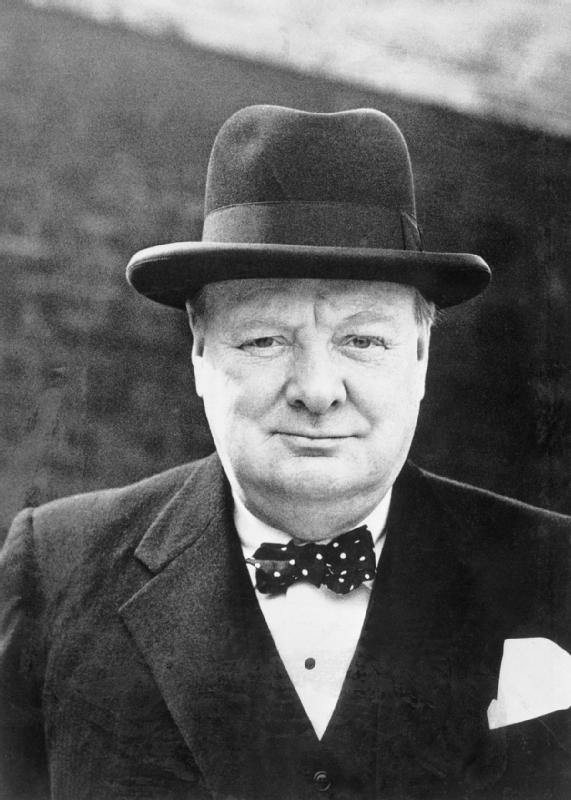
I do not support those who claim that Churchill was not „objective” in his relation of the war time. First, as we well know, there is no such thing as objectivity. History is played by people and is written by people. Their worldview and events they participated in always shape it. Second, I was amazed how honest Churchill was in his account. Of course, he toots his own horn, but he does not avoid writing about the sins and errors of his own nation and his own! It was the author himself, who wrote about his work: „This is not history, this is my case.” Well, I have many objections to the books, but I will write about them at the very end of this review.

is about Dunkirk and the amazing evacuation of about 300 thousands soldiers (including about 120 thousands French) to Britain. Having in mind the power of Hitler at that time of the war (May 1940) that was indeed a miracle. The narration about the Battle of Britain and RAF bravery is fantastic. It is here were we can read, firsthand, about emotions and gratitude that led Churchill to the famous saying:
„Never in the field of human conflict was so much owed by so many to so few”.
We then move to the North Africa and Middle East, just to discover how important the region was during the war, and how big was Britain effort not to allow Hitler to grow too much there. Here comes the part about Field Marshal Archibald Wavell, the great British soldier. This account is special — because Wavell was in fact dismissed by Churchill after unsuccessful operation „Battleaxe”. Churchill writes about Wavell in high esteem. The book ends with the vivid arration about the treacherous behaviour of Soviet Russia in the war — until the later time, when they were attacked by Hitler, what was called „The Soviet Nemesis”. Reading this part, I was amazed how shallow is human memory... Today, Russia's role is remembered as the part of the great alliance that conquered Hitler. And that is fine and true. However, we tend to forget (with great aid of
Soviet, and later and even today, Russian propaganda) that it was for Stalin’s policy that Hitler could gain so much in the beginning of the War. Were they not attacked, they would stay on Hitler's side... It is amazing that we don't see Russian's afterthoughts about that shameful part of their history ...
„Grand Alliance” is an epic tale about the turn in the fate of war and the formation of the alliance between Britain, United States, and now on the attacked side, Soviet Russia. It is extremely detailed and fine written part. Sometimes I lost sense that it is historical account, because it reads like a novel.

For example, when he writes about Poland and the tragic fate of Warsaw and the treacherous behaviour of Stalin and his puppet communist government (Lublin committee) it becomes clear that Allies simply indulged to Stalin’s whims and demands. BTW, I'm not entirely sure if Churchill did not try to exonerate himself from these sins in some way or another, but no one can deny he is honest in his narration...
However, there is deeply disturbing issue about the book, well, about all the books of the set. It is a complete silence about Holocaust... As we now know, Shoah, the mass murder of almost 6 million Jews during the war and about 5 to 11 million other ethnic or social groups was one of the major efforts of Germans, both logistically, politically and militarily. It is startling that Churchill does not write anything about it. I do not suspect him of anti-Semitism, though one of only two mentions about Jews in the entire set is a petty joke ..., but this ignorance is hard to understand.
There is no doubt that both Churchill and Roosevelt new about the systematic extermination well. Jan Karski, Polish underground fighter, informed western powers about that. There are evidences that both most important Polish Government in Exile figures, like Mr. Mikołajczyk had frequent talks with Anthony Eden, Churchill's right hand. So why such omission? Maybe it explains Churchill handling of the case of Jewish refugees coming to then being-born state of Israel?
I do not know, but this ignorance casts a deep shadow on Churchill's account, despite the paradoxical greatness of the books and the well deserved Nobel price in literature he won...
This review was written in Paris, between 25 and 29 of May, 2011 with lots of thoughts about France, Europe and the bad past they came through ...
Saturday, May 14, 2011
The dark side of British handling of the Palestine just after the war - a story told by Yoram Kaniuk

It is a story of brave Palestine-native hero — Yossi Harel, who in the course of 1947-48 brought about 20000 Shoah survivors to Palestine. There would probably be nothing strange in the story if it was not for British Navy and, more generally, British Mandate authorities to actively oppose the coming of the survivors to their land....
Kaniuk, who demonstrates the unusual talent of combining true historical account with a great story telling talent, does not seem to be anvengeful or even biased against British. He just coldly relates the episode of the complicated history o the birth of the state of Israel. This relation is, nevertheless, quite disturbing and embarrassing for the British — who verbally declared support to the Zion Cause, but did very little to help the nascent State to start its life in peace. The ships coming to Palestine from Europe were harassed and often turn back, not without fighting, to Europe. In the most dramatic stories, some Holocaust survivors were sent back to Europe and deported to the former Nazi camps!
Even calling these events „ironic” seems to be outrageous.
I have found the article that tells the true account of these events. The following picture of „Exodus 1947” ship comes from it:

„Commander of the Exodus” does not even try to explain why the events had such a turn there and at that time. The book focuses on the valour of its main hero and the brave people who believed they come to their dreamed off homeland — but were met by hostility of those in whose hands the fate of millions was endowed...
I must admit that I write this review long time after I read the book. And I write it now, because the another great book — that by Winston Churchil („The Second World War”) — sheds some light on the matters, and I will be reviewing it shortly. I will try to give my own theory in that forthcoming review....
Saturday, April 23, 2011
The third part of „The WWW Trilogy” — Just another flop ...

Honestly, after „Watch” I already had suspicion that the trilogy could and should be reduced to the single „Wake” part and would stay in our memories ...
However, it is not a first time in the genre that the sequel or, worse still, the second and third parts — are a far cry from the first book.
As you can read in my previous reviews (Wake, Watch), the „The WWW Trilogy” is about the emerging artificial mind born out of existing Web infrastructure. The theme itself is interesting, touches many current trends like AI, Semantic Web, knowledge representation, mind-body relation etc.
Unfortunately, while wandering from „Wake” to „Wonder” it arrives to extremely naive, almost childish story, possibly good to kids in the preschools...
The WebMind starts to talk to politicians, overthrows China government, works for peace, health and prosperity of humanity and so on, so on....
At some passages it is easy to identify some strange episodes that make me think that the author indulges in „product placement” activity. Repeated references to „a single iPhone button” or the advice WebMind gives to US president to use FireFox instead of Internet Explorer — are explicit „signals” of such activities...
Well, why I read it after all ?
I tuned to it only to get something lighter and less serious than my recent war-time reading...
I now regret I spent several hours listening to it. There are better books to spend time with ....
Monday, April 18, 2011
What to do with a dove thrown into the nest of snakes ...
I know this is a strange title. My language skills in the tongue which was not my mother's seems to be limited to express what I feel after reading this book. I will try to express it as clearly as I can:
It is about an incredible person. Probably the one among the best who was walking the earth ...
Yet his story left me in fear and sadness. It is about Dietrich Bonhoeffer. And about the book: „Bonhoeffer: Pastor, Martyr, Prophet, Spy: A Righteous Gentile vs. the Third Reich”. The author is Eric Metaxas.
 Please let me warn you. Be that as it may, I truly admire Bonhoeffer. I was surprised how deep his religiousness was. And how deeply, being faithful to Christianity, he understood Jewish roots of his religion — what, among other things, brought him to total denial of German ant-Semitism amplified and explored by the Nazi. I could only wish there were more such priests and monks and Christian laymen...
I have to write about my admiration, because in the later part of this review I will be critical also of Bonhoeffer !
So why I have such strange feelings and thoughts ?
Let me now tell you few basic fact — I do not intend to write long, typical review. Eric Metaxas’ work is a very good record of the life and struggle and martyrdom of Dietrch Bonhoeffer. Dietrich was German pastor and theologian. He was born in 1906 in Wrocław (Breslau). He came from very prestigious family of Professor Karl Bonhoeffer, the neurologists and psychiatrist. His decision to become a theologian, and later the priest came when he was only fourteen. His other talents were in music (was a very good pianist) and in sports (was quite good athlete).
The story of Bonhoeffer's life tells the tragic truth about that dark period in German, and more generally, in human history. He opposed the Nazi regime, he did it long before the war and during it. Despite his apparent pacifism and priesthood he conspired to kill Hitler. For his involvement in the plot against Hitler he was sentenced to death and executed by hanging on April 9th, 1945, just few weeks before the end of the war ...
For all interested in details there is a very good article about him on Wikipedia.
Now, let me come to the essence of my feelings. The biography relates also what was the attitude of the Churches to Hitler and his Nazi regime. And here came first shock. How little we know about the “German Christians” whose coat-of-arms had Nazi swastika inscribed into the cross! And how popular that movement was among German Protestants of that times. How little we know about Ludwig Müller — who became Reich’s Bishop in 1933. And let’s not blame only protestants. Catholic Church with all its majesty entered into specific state contract with Hitler — The Concordat. This shameful act, negotiated by pope-to-be, Eugenio Pacelli, was signed when it became quite clear what are true Hitler’s intentions... Do we really know, that it was never revoked by the Holy See? How can we really think of WORDS in the Pius XI encyclical „Mit brennender Sorge” when the ACT was still in place?
Of course there were Christians who opposed Hitler, of course there were priests murdered by Nazism. But what is the shocking truth, is that even in “Confessing Church” the opposition against anti-Semitism was relatively week, and its famous Barmen Declaration even does not list anti-Semitism as a crime!
I know I will tell harsh and strong words here — but all that represents nothing less than a total failure of Christianity in Europe in XX century. When you know all that facts, and spend some hours contemplating on them — what do you think when some European politicians speak about “Christian roots” of Europe?
I will not give answers to these burning questions — I know they would be too blatant...
It seems to me, that Bonhoeffer knew about this total failure, and to me it is clear from his letters, where we can find the term that latter become, somehow improperly, an emblem of his theology: Religionless Christianity:
Many “Christian” critics of Bonhoeffer thought of his ill will in these thoughts...
Did they know the history? Did they know how many of Hitler’s Willing Executioners (a suggestio to the book is intentional) were devote Christians?
I think that the Bonhoeffer notion of religion which possibly could be built upon ruins of Christianity — is the only true hope for Christianity — at least this is my private, and certainly heavily biased, opinion — of the person who equally intentionally left Christianity years ago ...
On these thoughts I seem to be in line with the author of the biography, though he avoids making such strong statements as I did here.
But there is also something in this book that is even more disturbing. Several times in the book, almost casually, its author relates Bonhoeffer’s and his circles, including his family, opinion about the First World War and the “unjust” treatment Germans got in and after the Treaty of Versailles... Imagine — the people who caused the first round of horrors in XX century, and who, including its best people, to whom Bonhoeffer certainly belonged, did not even accept the historical punishment they got ! Were they blind ?
Are we all blind? Were there only few doves and all that remained was the nest of snakes ?
Written in Paris, London & Lodz....
It is about an incredible person. Probably the one among the best who was walking the earth ...
Yet his story left me in fear and sadness. It is about Dietrich Bonhoeffer. And about the book: „Bonhoeffer: Pastor, Martyr, Prophet, Spy: A Righteous Gentile vs. the Third Reich”. The author is Eric Metaxas.

I have to write about my admiration, because in the later part of this review I will be critical also of Bonhoeffer !
So why I have such strange feelings and thoughts ?
Let me now tell you few basic fact — I do not intend to write long, typical review. Eric Metaxas’ work is a very good record of the life and struggle and martyrdom of Dietrch Bonhoeffer. Dietrich was German pastor and theologian. He was born in 1906 in Wrocław (Breslau). He came from very prestigious family of Professor Karl Bonhoeffer, the neurologists and psychiatrist. His decision to become a theologian, and later the priest came when he was only fourteen. His other talents were in music (was a very good pianist) and in sports (was quite good athlete).
The story of Bonhoeffer's life tells the tragic truth about that dark period in German, and more generally, in human history. He opposed the Nazi regime, he did it long before the war and during it. Despite his apparent pacifism and priesthood he conspired to kill Hitler. For his involvement in the plot against Hitler he was sentenced to death and executed by hanging on April 9th, 1945, just few weeks before the end of the war ...
For all interested in details there is a very good article about him on Wikipedia.
Now, let me come to the essence of my feelings. The biography relates also what was the attitude of the Churches to Hitler and his Nazi regime. And here came first shock. How little we know about the “German Christians” whose coat-of-arms had Nazi swastika inscribed into the cross! And how popular that movement was among German Protestants of that times. How little we know about Ludwig Müller — who became Reich’s Bishop in 1933. And let’s not blame only protestants. Catholic Church with all its majesty entered into specific state contract with Hitler — The Concordat. This shameful act, negotiated by pope-to-be, Eugenio Pacelli, was signed when it became quite clear what are true Hitler’s intentions... Do we really know, that it was never revoked by the Holy See? How can we really think of WORDS in the Pius XI encyclical „Mit brennender Sorge” when the ACT was still in place?
Of course there were Christians who opposed Hitler, of course there were priests murdered by Nazism. But what is the shocking truth, is that even in “Confessing Church” the opposition against anti-Semitism was relatively week, and its famous Barmen Declaration even does not list anti-Semitism as a crime!
I know I will tell harsh and strong words here — but all that represents nothing less than a total failure of Christianity in Europe in XX century. When you know all that facts, and spend some hours contemplating on them — what do you think when some European politicians speak about “Christian roots” of Europe?
I will not give answers to these burning questions — I know they would be too blatant...
It seems to me, that Bonhoeffer knew about this total failure, and to me it is clear from his letters, where we can find the term that latter become, somehow improperly, an emblem of his theology: Religionless Christianity:
Our whole nineteen-hundred-year-old Christian preaching and theology rest on the "religious a priori" of mankind. "Christianity" has always been a form--perhaps the true form--of "religion." But if one day it becomes clear that this a priori does not exist at all, but was a historically conditioned and transient form of human self-expression, and if therefore man becomes radically religionless--and I think that that is already more or less the case (else how is it, for example, that this war, in contrast to all previous ones, is not calling forth any "religious" reaction?)--what does that mean for "Christianity"?
Many “Christian” critics of Bonhoeffer thought of his ill will in these thoughts...
Did they know the history? Did they know how many of Hitler’s Willing Executioners (a suggestio to the book is intentional) were devote Christians?
I think that the Bonhoeffer notion of religion which possibly could be built upon ruins of Christianity — is the only true hope for Christianity — at least this is my private, and certainly heavily biased, opinion — of the person who equally intentionally left Christianity years ago ...
On these thoughts I seem to be in line with the author of the biography, though he avoids making such strong statements as I did here.
But there is also something in this book that is even more disturbing. Several times in the book, almost casually, its author relates Bonhoeffer’s and his circles, including his family, opinion about the First World War and the “unjust” treatment Germans got in and after the Treaty of Versailles... Imagine — the people who caused the first round of horrors in XX century, and who, including its best people, to whom Bonhoeffer certainly belonged, did not even accept the historical punishment they got ! Were they blind ?
Are we all blind? Were there only few doves and all that remained was the nest of snakes ?
Written in Paris, London & Lodz....
Subscribe to:
Posts (Atom)
The Tragedy of Ideas: How intellectuals lead history astray ...
It is often assumed that philosophical, psychological, sociological, and literary works cannot be held responsible for what later unfolds in...

-
I've just started reading the third volume of Peter Sloterdijk's Spheres. It promises to be a true intellectual feast... "Foa...
-
Some time ago I finished reading Churchill's multiple volume account on II World War . As I wrote before, Churchill narration is excelle...

