 |
| http://semanticday.makolab.fr/ |
:-)
|
| http://semanticday.makolab.fr/ |
We are swimming upstream against a great torrent of disorganization, which tends to reduce everything to the heat-death of equilibrium and sameness described in the second law of thermodynamics. What Maxwell, Boltzmann, and Gibbs meant by this heat-death in physics has a counterpart in the ethics of Kierkegaard, who pointed out that we live in a chaotic moral universe. In this, our main obligation is to establish arbitrary enclaves of order and system. These enclaves will not remain there indefinitely by any momentum of their own after we have once established them. Like the Red Queen, we cannot stay where we are without running as fast as we can.
 I usually try, when writing reviews, not to spoil a given book to its future readers.
„It had always seemed to him that the ideal man was either a soldier or a poet, and so, having spent most of his years being one of those — to him — polar opposites, he determined lo attempt to turn his life around and become the other...”In fact, from this moment, I had some trouble with the character. The book was written in such a way, that, if one reads only superficially — it becomes easy to put oneself on the side of Zakalwe. He is attractive person, ruthless, powerful, yet with „some” grain of remorse. However, deeper reading reveals that the true intent of the author was to show the evil and badness in its purest form.
„Go back: go right back. What was I to do? Go back. The point is to win. Go back! Everything must bend to that truth.”His attempt to exonerate himself from the crime, trying to prove that the end justified the means, are fruitless. The only leaving member of Zakalwe family rejects him.
„Why do you do this? she said. “Why do you do this ... to him: to me . . . why? Can’t you just leave us all alone?” (...) Livueta Zakalwe walked out, closing the door behind him.In the scene that portraits the final and the last rejection, like in Last Judgement, he almost dies from a brain stroke. He is rescued by a drone — perhaps only to feel to the end of his days the pain and the burden of the evilest of evils a human can commit…
„But such consummate skill, such ability, such adaptability, such numbing ruthlessness. Such a use of weapons when anything could become weapon... ”
But such consummate skill, such ability, such adaptability, such numbing ruthlessness. such a use of weapons when anything could become weapon...
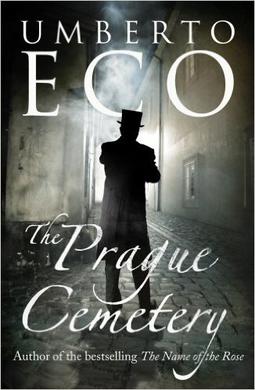 What is the mindset of conspiracy theory brewer? What kind of mental characteristic such a person has ?
 Before I read this book from cover to cover (or rather from first Kindle screen to the last, and listened in parallel, from first seconds to the last of its 8 hours narration by Peter Johnson :-) ) I was a bit afraid it would bear large dose of pessimism. First, I got some such impression from some posts on its author, David Weinberger, blog. The book's very title and some of its chapters' titles „Knowledge Overload” seemed to support my initial feelings.
We will argue about whether our new knowledge will bring us closer to the truth, as I think it overall does. But one thing seems clear: Networked knowledge brings us closer to the truth about knowledge.
Of course, the Net can scale that large only because it doesn’t have edges within which knowledge has to squeeze. No edges mean no shape. And no shape means that networked knowledge lacks what we have long taken to be essential to the structure of knowledge: a foundation.
As knowledge becomes networked, the smartest person in the room isn’t the person standing at the front lecturing us, and isn’t the collective wisdom of those in the room. The smartest person in the room is the room itself: the network that joins the people and ideas in the room, and connects to those outside of it. It’s not that the network is becoming a conscious super-brain. Rather, knowledge is becoming inextricable from—literally unthinkable without—the network that enables it.
(...)
Networked knowledge is less certain but more human. Less settled but more transparent. Less reliable but more inclusive. Less consistent but far richer. It feels more natural because the old ideals of knowledge were never realistic, although it’s taken the networking of our culture to get us to admit this.
 This is about Brian Selznick's novel „The Invention of Hugo Cabret” that gave rise to famous 3D movie by Martin Scorsese. The story of 12 year old boy living in Paris, who cares for Parisian train station clocks after his father's death. The hunger and solitude force the boy to steel food. The boy tries to restore the artificial, mechanical man - The Automaton, discovered by his father in the museum he worked for, and where he later dies from fire. The boy finally succeeds to animate it and the automaton draws sketches that led to discovery of ... Well, I will not spoil it completely ...
It is often assumed that philosophical, psychological, sociological, and literary works cannot be held responsible for what later unfolds in...


